Product Design · 2023
Relic
Building trust infrastructure for NFT collectors at the point of purchase.
- Role
- Product DesignerDesign Advocate
- Team
- FounderPMEngineeringPartnershipsAdvisor
- Timeline
- 4 months
- Outcome
- Beta launched$500K secured
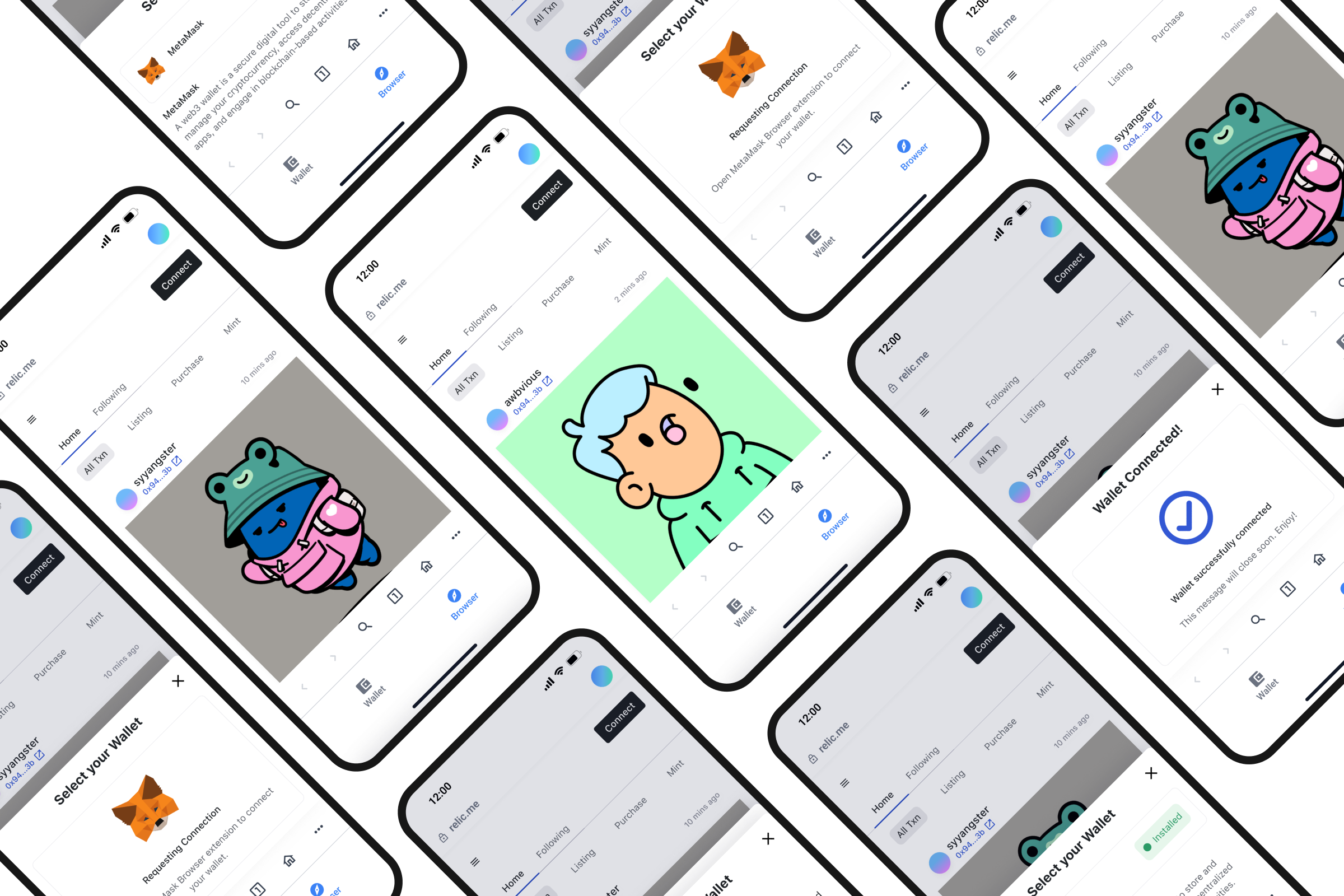
The Problem
NFT collectors were relying on Discord, Twitter, and Telegram to track releases and time purchases — the same channels actively exploited by scammers. Without a trusted, centralized source, wallet commitment became the highest-anxiety moment in the entire acquisition funnel. Every hesitation at that step was a lost conversion and a lost collector.
The opportunity wasn’t better data. It was a product that could reduce that anxiety enough to move collectors from passive discovery to confident action.
Defining the Right User
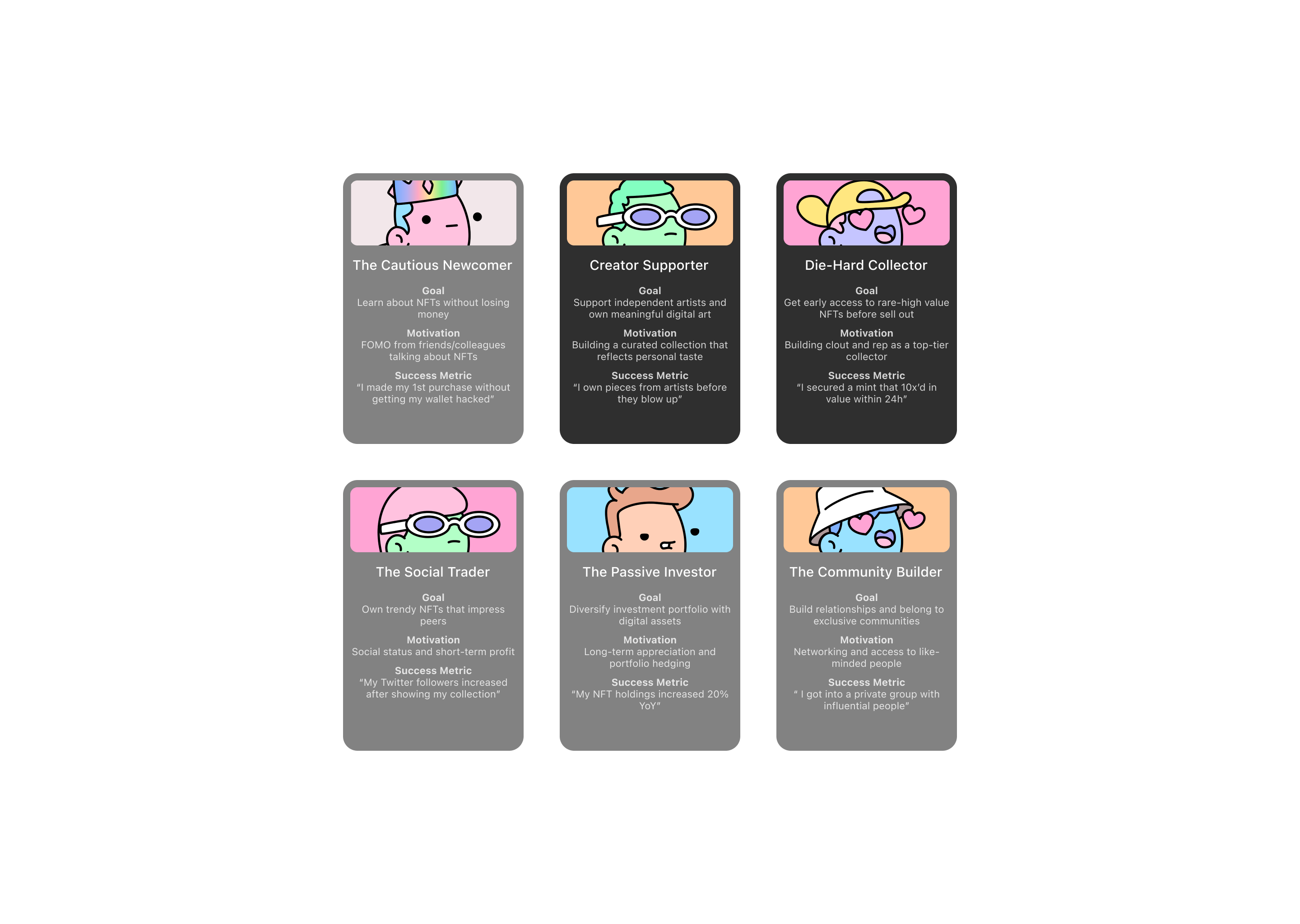
With a compressed post-pivot timeline, research was kept lean and signal-focused — three user interviews, journey mapping across four purchasing flows, and a competitive audit of Discord and Twitter. The insight that reframed everything: collectors weren’t missing information — they were missing trust in what they were seeing.
Six segments were mapped and pressure-tested before converging on one: the NFT Enthusiast — a collector who makes time-sensitive purchase decisions based on social proof, on-chain activity, and community reputation. That behavioral profile became the design brief: a feed that surfaced the right signals, fast enough to act on, with enough trust context to commit.
Process & Validation
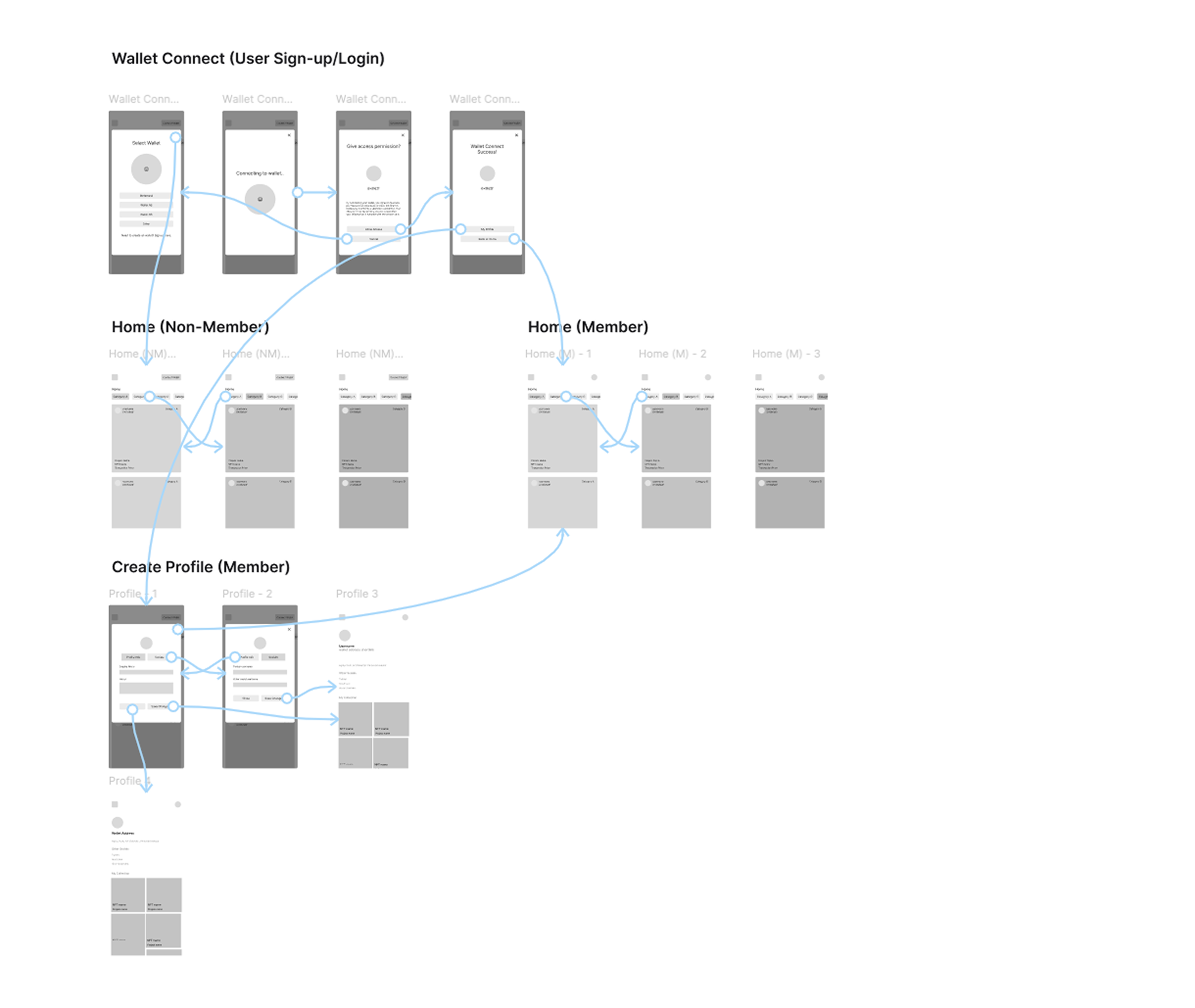
Four rounds of usability testing were structured around three core flows: wallet connect, the home feed across member and non-member states, and profile creation. Keeping fidelity low was deliberate — it focused feedback on structure and sequence, not visual polish, and kept iteration cycles short enough to respond to findings quickly.
The member/non-member split emerged as an early critical insight: the trust signals needed before wallet commitment were fundamentally different from those needed once a user was already in the product. That distinction shaped the information architecture across the entire flow.
Key Design Decision: The Feed Card
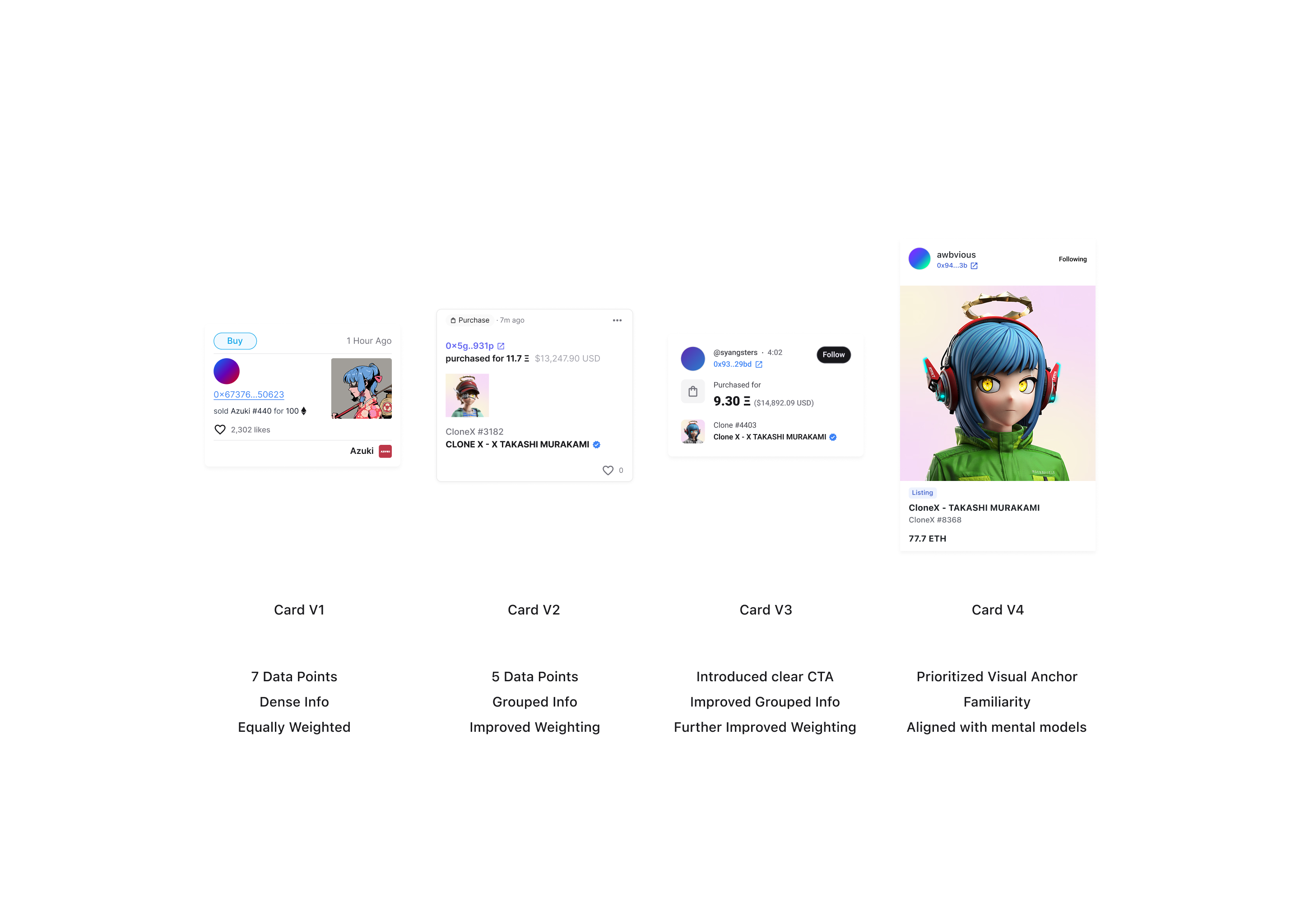
The NFT Enthusiast’s core behaviour was defined early: time-sensitive decisions driven by social proof and on-chain activity. That behavioural profile made the initial layout direction — a custom dashboard modeled on the previous analytics product — a direct conflict with the user brief. Data flexibility and visual differentiation didn’t mean anything if a collector couldn’t scan, parse, and act before a listing expired.
A card-based format was validated as the stronger direction because it eliminated the learning curve at the highest-stakes moment. By aligning with mental models users already held from Twitter and OpenSea, trust signals surfaced faster — reducing the cognitive overhead that was causing hesitation at point of commitment.
Four card variations were then tested to optimize signal clarity, progressively reducing data points from seven to a visual-anchor-first hierarchy. The trade-off accepted was reduced data density in exchange for faster time-to-scan — a deliberate decision validated by time-on-task observations. For a collector acting on a real-time listing, scan speed wasn’t a UX preference. It was the conversion variable.
Outcomes
From private investors — the clearest signal that the consolidated discovery and trust model resonated beyond the initial user cohort and demonstrated commercial viability.
Within ~4 months of a full product pivot — made possible in part by adopting Radix UI, which compressed iteration cycles and allowed more usability rounds within the same runway.
Progressive time-on-task improvements across four rounds provided the validation confidence needed to move into beta without instrumented analytics.
What I’d Do Differently
Instrument lightweight event tracking before the first usability round. Having a quantitative baseline would have made scope trade-off conversations with engineering more precise — and the case for prioritizing trust signals easier to defend with data.